Cat Piano is back
In April 2009, Kiichi recorded three cats and we shipped a piano. Tap a key, the cat meows that note. There was a kitten asleep on the launch screen, seven white keys and five black ones, and a flip side where you picked which cat was singing. It was downloaded millions of times. The iPad edition, a year later, went to second place in Japan. Then it sat, and when the App Store dropped 32-bit apps it went dark, though a few thousand people a month still put it on an old phone from their purchase history.
The way it was made is the part I like telling. Each cat was one recording. We opened it in Audacity, shifted it up or down a semitone at a time, and saved twelve files, C to B. The app played one file per key. That was the whole engine.
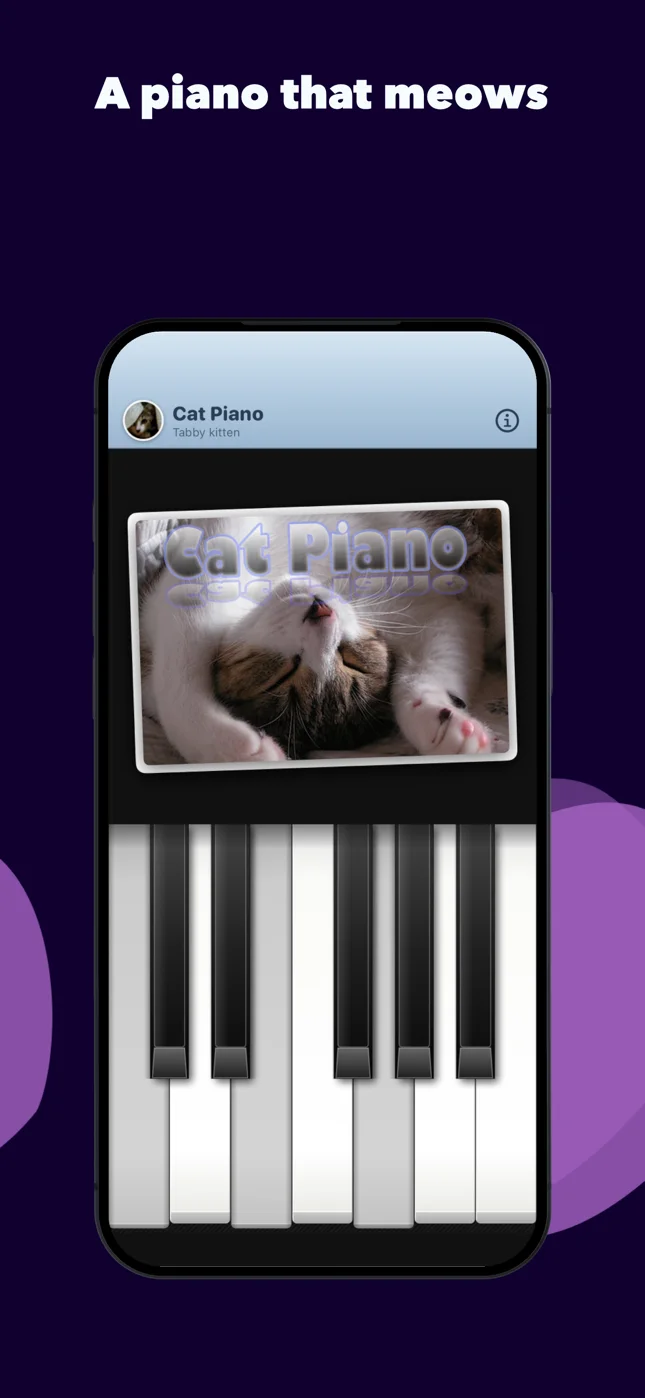
One meow, every key
Last year I built a small prototype for myself: take any sound and turn it into a piano. It measures the pitch of the sound, and when you press a key it shifts the sound by exactly the distance to that note, live. When it came time to bring Cat Piano back, that was the engine, and the 2009 cats were the sounds. One meow per cat, the same recordings, pitched to whatever key you touch.
What that gives you is a keyboard that can be as wide as you like. Twelve keys, as in 2009, or twenty-four or thirty-six, and every one of them is in tune, because there is no file to run out of. Choose a cat on the flip side and you hear it exactly as it was recorded; the keys take it from there.
Real keys
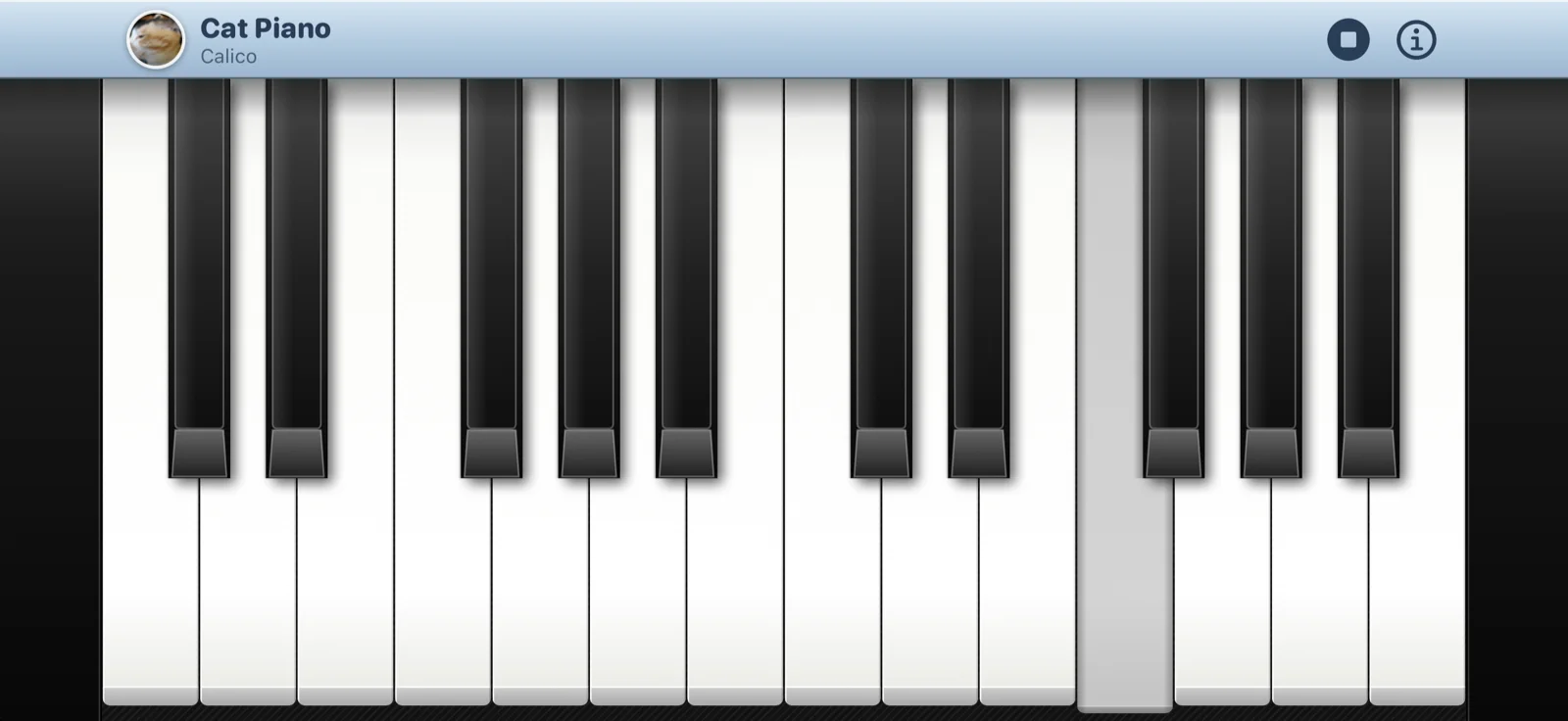
The 2009 keys were sixty-seven pixels wide. I kept the proportions and drew them again: ivory with a front edge, bevelled black keys, keys that sink when you press them and shade the key beside them. Every finger is tracked on its own, so chords work, a glissando with the side of your hand works, and ten cats can sing at once without the sound turning to mud. Hold the phone sideways and the keys fill the screen; upright, the kitten sits above them, the same kitten.
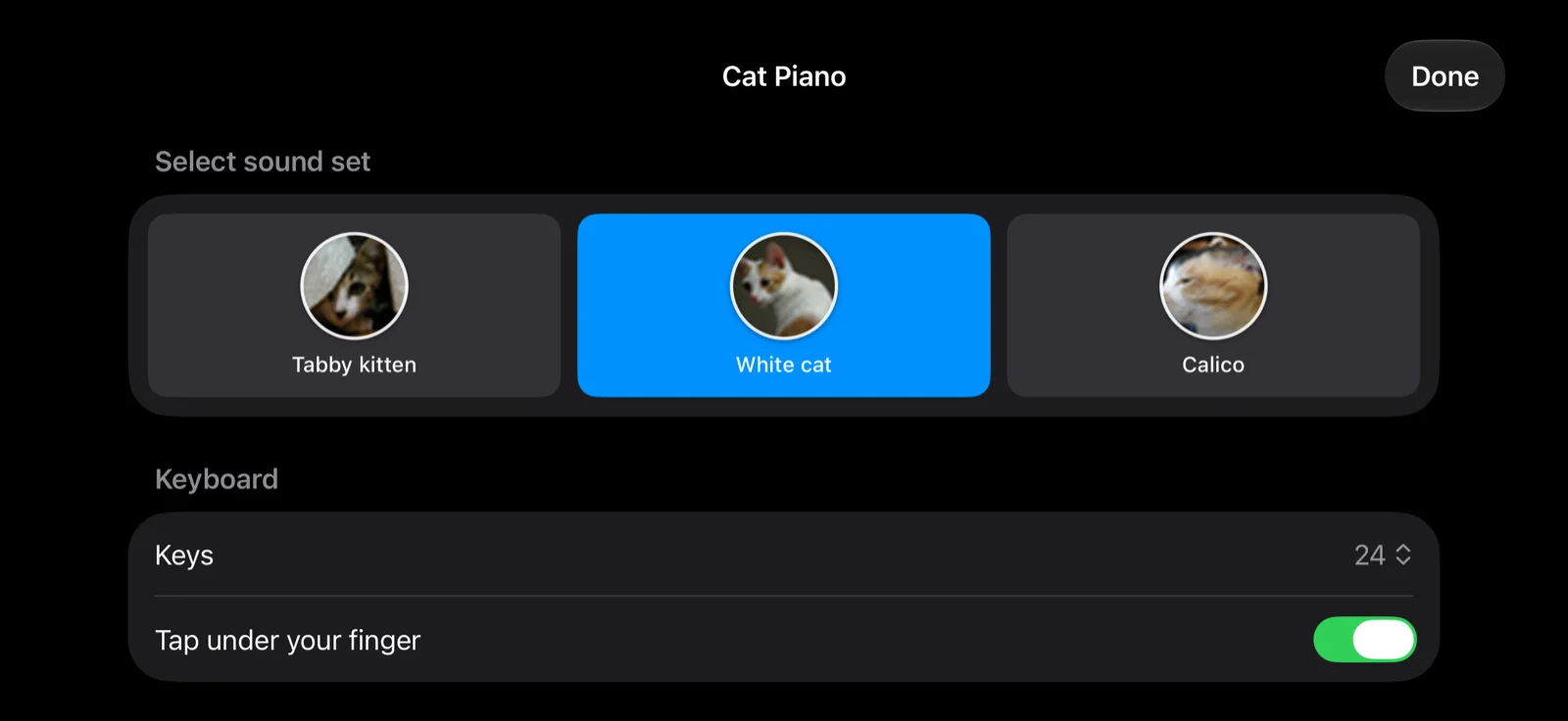
Your own cat
The prototype’s idea survives as the fourth voice. Record your own cat, or your dog, or a friend, for up to four seconds, or pick an audio file, and the keys play it in tune. The microphone is asked for when you tap Record and nowhere else, and the recording stays on the phone.
Six tunes play themselves in whichever voice you chose, with the keys lighting up, at the speed you like. Ode to Joy in calico is better than it has any right to be.
The same record
Cat Piano 2.0 ships on the record it began on, seventeen years later, for iPhone and iPad. No account, no ads, nothing collected. The product page is objectgraph.com/catpiano.